Most toilet problems in a Colorado Springs home can be repaired. A running toilet, a weak flush or a toilet that rocks usually needs a new part or a new seal, not a new toilet. Replacement makes more sense when the bowl or tank is cracked, when clogs keep happening with no problem in the drain line, or when an old toilet uses far more water than a new one.
This guide walks through the common problems, which ones are repairs and which ones point to a new toilet, and what we check before we recommend either.
Repair or Replace: The Quick Answer
| Problem | Usually a repair | Consider replacing |
|---|---|---|
| Runs or refills on its own | Yes, flapper or fill valve | Only if parts keep failing |
| Water on the floor at the base | Yes, new wax seal | If the toilet itself is cracked |
| Rocks or shifts | Yes, bolts, seal or flange | Rarely |
| Weak flush | Often, chain, water level or rim holes | If it is an old low-flow model that never flushed well |
| Crack in the tank or bowl | No | Yes |
| Clogs often, drain line is clear | Sometimes | Often |
Problems a Repair Usually Fixes
A toilet looks simple, but a few small parts do all the work. When one wears out, the fix is often quick.
A Toilet That Runs
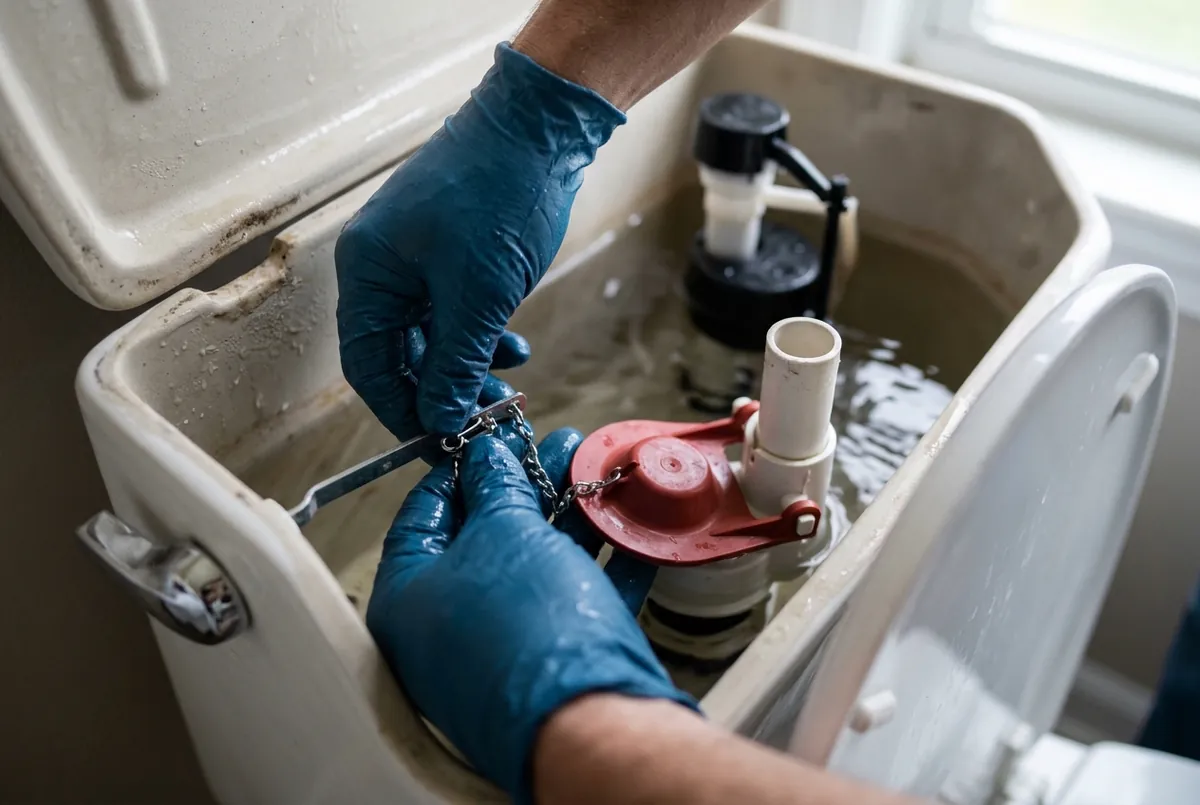
If you hear water running long after a flush, or the tank refills on its own every so often, the flapper may be worn. The flapper is the rubber seal at the bottom of the tank. When it no longer seals, water leaks into the bowl and the tank keeps refilling. A sticking fill valve or a chain that is too short or too long can cause the same thing.
A running toilet is worth fixing soon. It wastes water every hour of the day, and the fix is usually a part, not a new toilet.
Water Around the Base
Water on the floor around the base often means the wax ring has failed. That is the seal between the toilet and the drain. We lift the toilet, check the flange and the floor, and set it back on a new seal. Left alone, a slow leak at the base can rot the subfloor, which turns a small repair into a bigger one.
A Toilet That Rocks
A toilet that moves when you sit usually has loose bolts or a damaged flange, the fitting that holds it to the floor. Rocking breaks the wax seal over time, so a rocking toilet often becomes a leaking toilet. Tightening, a new flange or a reset on a new seal usually fixes it.
A Weak Flush
Low water in the tank, a loose flapper chain or mineral buildup in the small holes under the rim can weaken a flush. Minerals in the water can leave scale in those rim holes over the years. Adjusting the tank or clearing the buildup often brings the flush back.
Signs It Is Time to Replace the Toilet
Some problems are not worth patching.
- A crack in the bowl or tank. A cracked tank can leak slowly or fail all at once. Cracks cannot be fixed reliably, so replacement is the safe choice.
- Frequent clogs with a clear drain line. If the toilet clogs often and the line past it checks out fine, the toilet design may be the issue. Some older low-flow toilets simply do not flush well.
- Parts that keep failing. If you are replacing flappers and fill valves again and again, or parts for an older model are hard to find, a new toilet can cost less over time.
- An old toilet that uses a lot of water. The EPA says older, inefficient toilets can use as much as 6 gallons per flush, while newer designs use 1.28 gallons per flush or less. It also notes that toilets account for nearly 30 percent of an average home's indoor water use.
- You are remodelling the bathroom. If the floor is coming up anyway, it is a good time to change the toilet height or style.
When the Problem Is Not the Toilet
Not every toilet problem starts in the toilet. If it clogs again and again, or water rises in the tub or gurgles when another fixture drains, the trouble may be further down the line.
In that case a new toilet will not help. We check the drain line past the toilet, and if needed run a camera to see what is catching waste. Older homes on the Westside, in Manitou Springs and in Security-Widefield are more likely to have older drain and sewer pipe, and tree roots can find their way into older lines. Our drain cleaning and camera inspection services cover those cases.
What Affects the Cost
We do not quote prices without seeing the job, because a few things change the work involved:
- A part or a whole toilet. A flapper or fill valve is a much smaller job than a new toilet.
- The flange and the floor. A broken flange or a soft subfloor from an old leak adds work.
- The toilet you choose. If you replace, the height and style you pick affect the cost.
- The drain line. Repeat clogs may need a camera check of the line past the toilet.
- Access. A tight half bath takes more time than an open main bathroom.
Whatever the job, you get an estimate before any work starts, with upfront pricing and no hidden fees. If a repair will do, we will tell you. We are not in the business of selling you a toilet you do not need.
How We Handle a Toilet Call
- Diagnostic Assessment. We check the tank parts, the wax seal, the flange, the bolts and the floor around the base. If clogs keep coming back, we look at the drain line too.
- Upfront Strategy. We explain whether a new part, a reset on a new seal or a new toilet makes sense, and give you an estimate before work starts.
- Precision Execution. We replace the parts or set the toilet, test the flush, check the base for leaks, and leave your bathroom clean. We wear shoe covers in your home.
Common Questions
How do I know if my toilet is leaking inside the tank?
Listen for the tank refilling when nobody has flushed, or watch the water in the bowl for a slow trickle after the tank fills. Either one usually means the flapper or fill valve needs attention.
Is a little water on the tank in summer a leak?
Not always. Beads of water on the outside of the tank can be condensation, especially on humid days. Water on the floor at the base, or drips from the supply line or tank bolts, is a leak.
Can you install a toilet I bought myself?
Ask when you call. We will talk through the model you have in mind and make sure it fits your bathroom and drain.
Need Toilet Repair or a New Toilet? Call Incline Plumbing & Drain
We are a locally owned plumber based on the Westside of Colorado Springs, serving homes across the Pikes Peak region, from Fountain to Falcon. We find the cause first, give honest advice on repair or replacement, and give you an estimate before any work starts.
Learn more about our toilet repair and replacement service, or our general plumbing repairs. Call us Monday to Friday, 7am to 5pm, or contact us online.