A tankless water heater suits a Colorado Springs home that wants hot water that does not run out and can support the gas, venting and power one needs. A tank water heater suits a home that wants the lower upfront cost and the simplest swap. The right answer depends on your household, your house and how long you plan to stay.
Why This Matters
Most people pick a water heater on the worst possible day: the old one has just quit and the shower is cold. That is when it is easiest to grab the same thing again without asking if it still fits.
If your tank is getting older, or hot water runs out before the last shower, it is worth comparing the two now. You get to choose on your schedule, not in a rush.
How Each Type Works
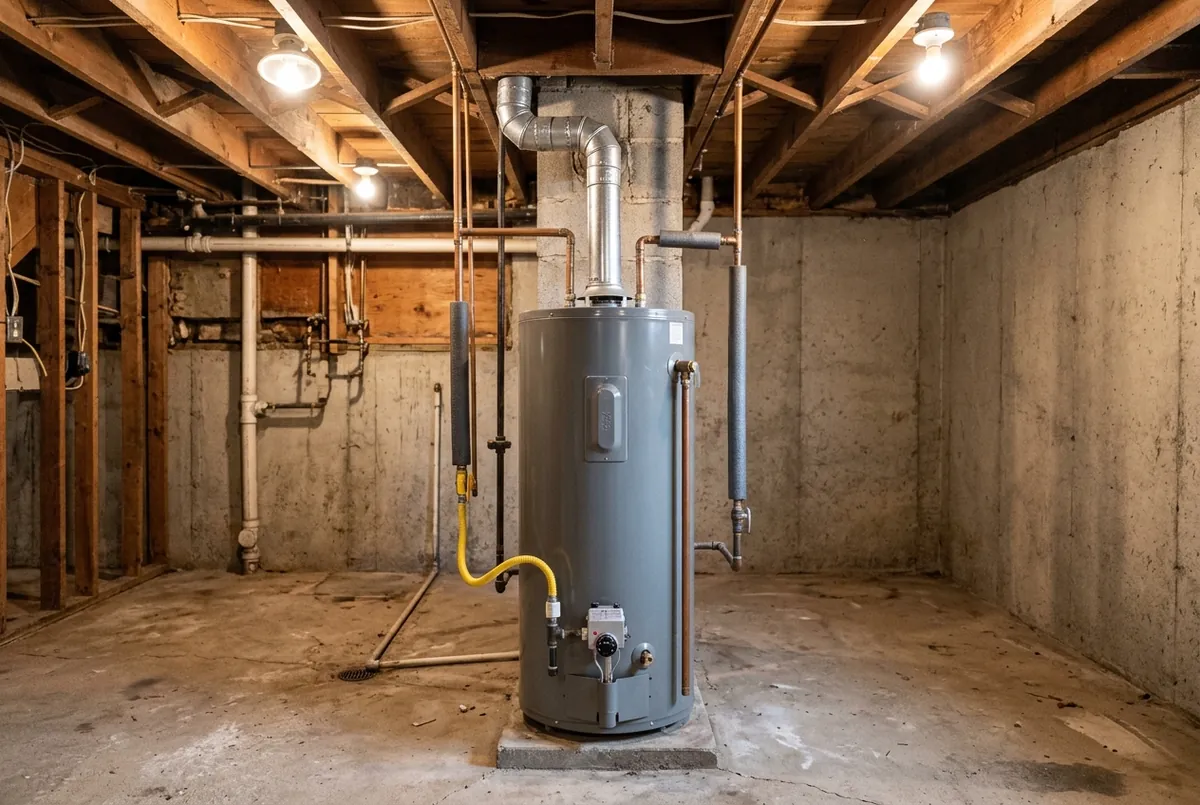
Tank Water Heaters
A tank water heater keeps a full tank of water hot all day, whether you use it or not. When you open a tap, hot water flows out of the top of the tank and cold water fills in at the bottom. Once the hot water is used up, you wait while the tank heats a new batch.
Tankless Water Heaters
A tankless water heater has no store of hot water. It heats water as it flows through the unit, only when a tap is open. As long as the flow stays inside what the unit can heat, the hot water keeps coming. ENERGY STAR puts it this way: by heating water only when it is needed, certified gas tankless units cut water heating expenses while also providing continuous hot water delivery.
Tankless vs Tank Side by Side
Here is how the two compare on the points homeowners ask us about most.
| Tank | Tankless | |
|---|---|---|
| Hot water supply | Runs out when the tank is empty, then needs time to reheat | Keeps coming as long as the flow stays within the unit's limit |
| Upfront cost | Lower, especially for a like-for-like swap | Higher, more so for a first switch from a tank |
| Space | Floor space for a tall tank | Small unit on the wall |
| Standby heat loss | Keeps water hot all day, used or not | Heats only when a tap is open |
| Gas, venting and power | Usually reuses what is already there | Often needs a bigger gas line, new venting or more electrical capacity |
| Upkeep | Drain and flush to clear sediment | Yearly flush to clear scale |
Neither one is the better heater for every home. The table just shows where each one wins.
What Our Winters Change
A tankless heater works harder when the water coming into the house is colder. In winter, the water entering homes across the Pikes Peak region is colder than it is in summer. In higher towns like Monument, Palmer Lake and Woodland Park, it is colder still.
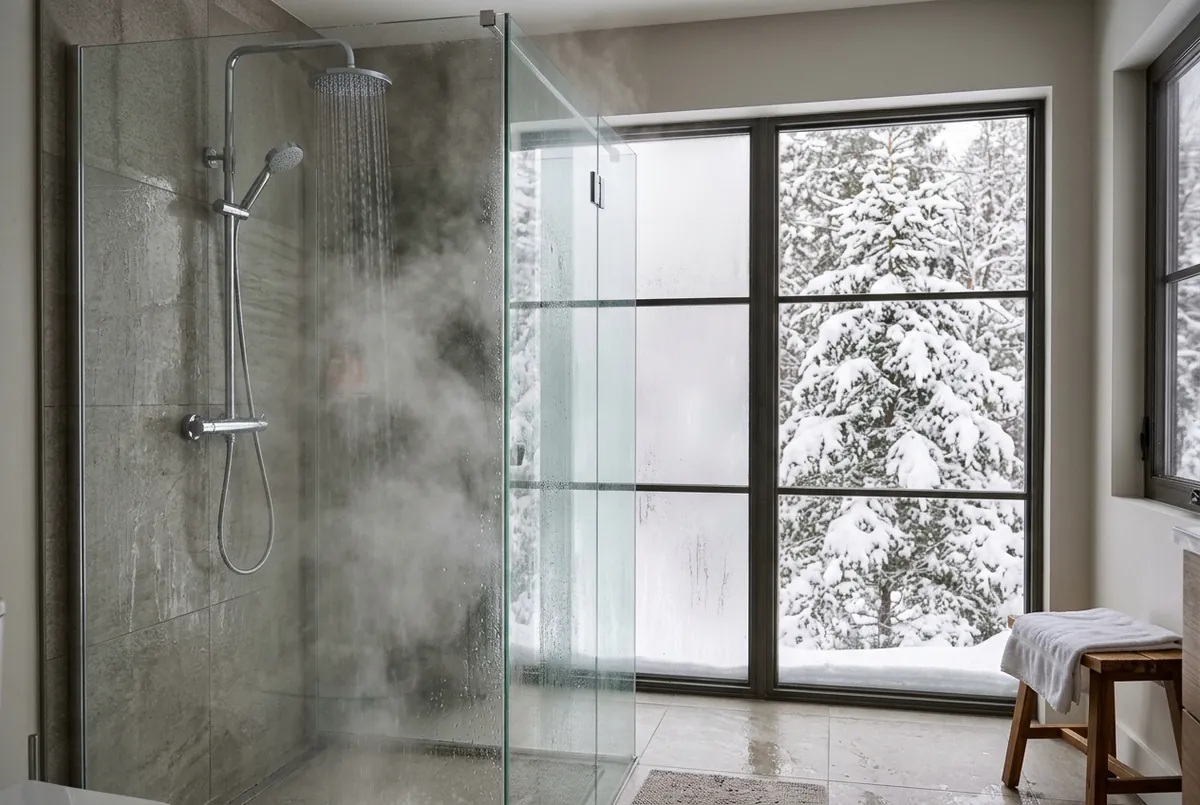
That matters for sizing. A tankless unit that keeps up with two showers in July may struggle with two showers in January. When we size a unit, we size it for winter use, so the shower stays hot when you need it most.
Tank heaters feel the cold too. Colder incoming water means the tank takes longer to recover after a big draw. If your family already runs out of hot water on winter mornings, that is a sign your current tank is undersized for how you live now.
Which One Fits Your Household?
A Tank Often Makes Sense If
- Your current tank has done the job well and nothing about your household has changed.
- You want the lowest upfront cost and the simplest install.
- You may sell the home in the next few years.
- Your gas line, venting or electrical panel would need major upgrades to support a tankless unit.
Tankless Often Makes Sense If
- Hot water runs out during back-to-back showers or when guests stay.
- You plan to stay in the home for years.
- You want floor space back in a utility room, closet or garage.
- Your home can support the gas, venting and power a tankless unit needs, or you are willing to upgrade them.
Your household size, number of bathrooms and habits all count. A couple in a two-bedroom home has very different needs from a family of five with a soaking tub.
What a Switch From Tank to Tankless Involves
A tank to tankless switch is a bigger job than a like-for-like tank swap. Before we recommend one, we check three things.
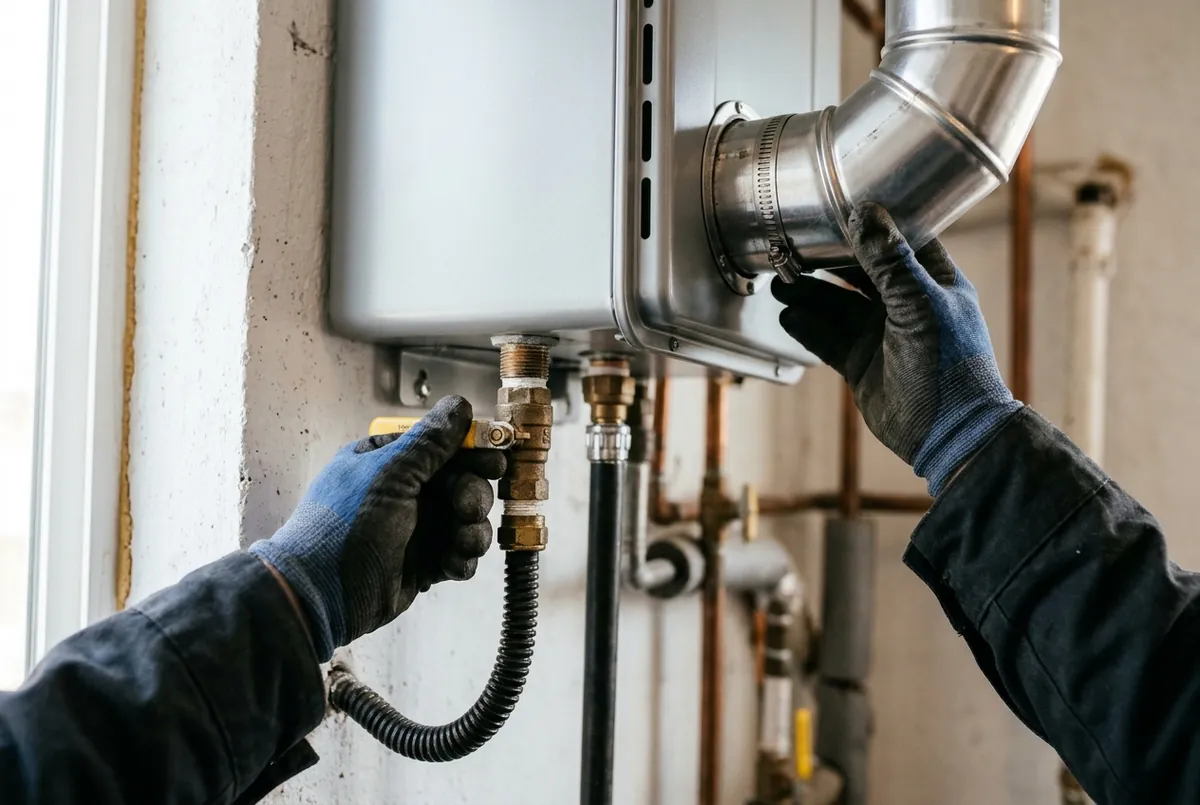
- Gas supply. Gas tankless units need a lot of gas while they run. Some homes need a larger gas line to feed one.
- Venting. Many gas tankless units need a different vent than the old tank used. We look at where a vent can run and how far.
- Electrical. Electric tankless units draw a lot of power. We check whether your panel can support one.
Older homes on the Westside and in Manitou Springs often have tight spaces and older vents, so the check matters more there. Many newer homes in Falcon, Monument and Fountain have garages or utility rooms with room for a wall-mounted unit.
Permits are often needed for water heater work. Check with the Pikes Peak Regional Building Department, or your town, about what your job needs.
What Drives the Cost
We do not list prices here, because every home is different and a number without a visit would only be a guess. What we can tell you is what moves the price:
- Like-for-like or a switch. Replacing a tank with a new tank, or an old tankless unit with a new one, is simpler than a first switch from tank to tankless.
- Gas, venting and power upgrades. These are often the biggest extra in a switch.
- Unit size. A unit sized for a large household and winter use costs more than a small one.
- Location. A heater in an open garage is easier to reach than one in a tight closet.
Tankless usually costs more to put in. Some homeowners make part of that back over time through lower standby losses, and some value the steady hot water more than the savings. Ask for an estimate on both options so you can compare them on paper.
Upkeep for Both
Both types last longer with care.
- Tank heaters collect sediment at the bottom. Draining and flushing the tank helps it heat well and run quietly. A popping or rumbling sound is often sediment.
- Tankless heaters build up scale inside the heat exchanger. A yearly flush keeps them working well. A tankless unit that gives a burst of cold water or shuts off mid-shower may need a flush or a check.
Common Questions
Will a tankless heater give me endless hot water?
It keeps hot water coming as long as the total flow stays within what the unit can heat. Run too many showers and appliances at once and the water can cool. Sizing the unit for your household and for winter is what prevents that.
Can I put a tankless heater where my tank is now?
Often, yes, but it depends on the gas supply, venting and power at that spot. We check all three before we recommend it.
Should I replace my tank now or wait until it fails?
If it is older, leaking at the base, making loud noises or running out of hot water sooner than it used to, plan the change now. Choosing ahead of time gives you room to compare tank and tankless instead of taking whatever is available that day.
When to Call a Professional
Call a licensed plumber when:
- Your tank is leaking, rusty at the base or making loud popping sounds.
- Hot water runs out sooner than it used to.
- You want to compare tank and tankless for your home.
- Your tankless unit shows an error code or gives bursts of cold water.
Gas lines and venting are not DIY work. A wrong vent or an undersized gas line can be a safety problem, not just a comfort one.
Thinking About Tankless in Colorado Springs? Talk to Incline Plumbing & Drain
We are a locally owned plumber based on the Westside of Colorado Springs, and tankless installation is a focus for us. We repair and replace tank water heaters of all brands, too. We look at how your household uses hot water, check your gas, venting and power, and give you an estimate before any work starts.
Learn more about our tankless water heater installation or our water heater repair and replacement service. You can also see how a visit works. Call us Monday to Friday, 7am to 5pm, or contact us online.