A sewer scope before buying a home in Colorado Springs is a camera inspection of the sewer line from the house to the street. It shows roots, cracks, sags and old pipe that a general home inspection usually does not see, so you can ask questions or negotiate before you close.
Why This Matters
The sewer line is one of the few big systems in a house you cannot see. It is buried under the yard, and most of the time it gives no sign of trouble until it backs up.
Once you own the home, that line is likely yours. Colorado Springs Utilities says that when a problem is in the private service line, it's the property owner's responsibility to arrange repairs. Other providers across the Pikes Peak region often work the same way, so check with yours. A short camera inspection before closing tells you what you are taking on.
What a Sewer Scope Is
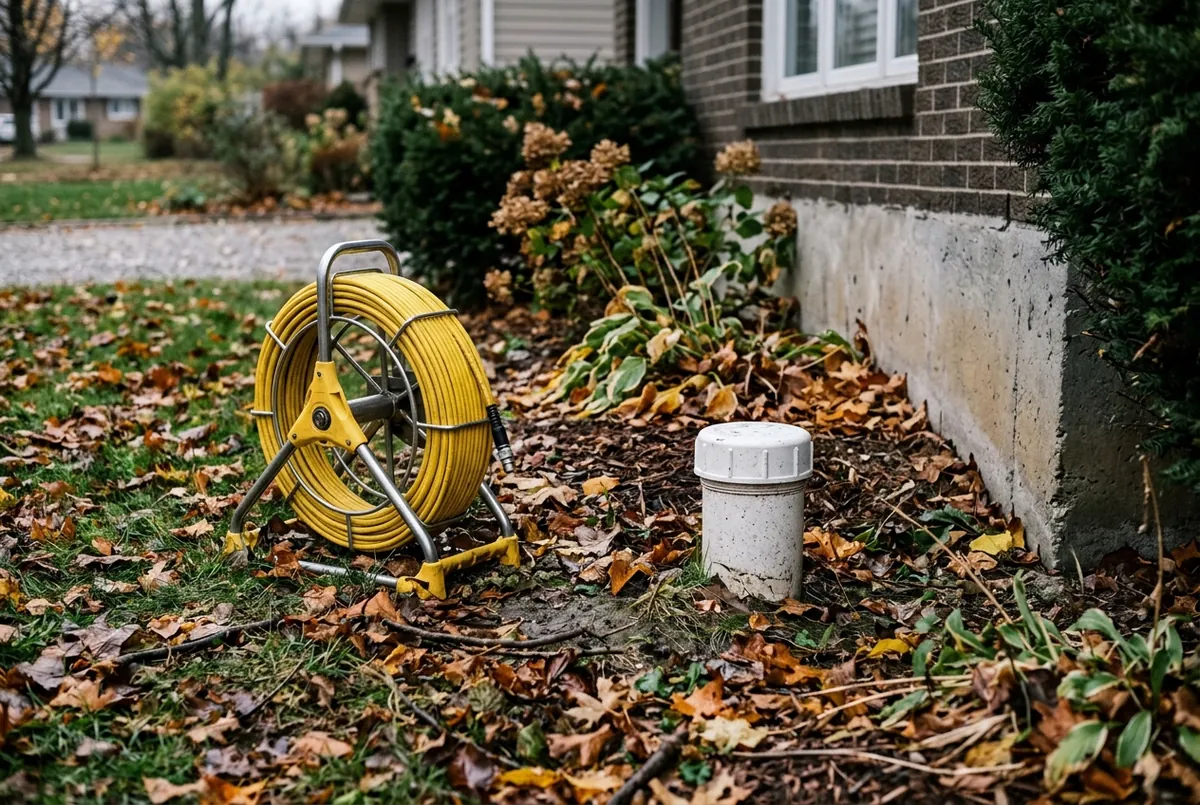
A sewer scope is a camera inspection of the main sewer line. We feed a small waterproof camera on a cable into the line, usually through a cleanout, and watch the screen as it travels toward the street. You can watch with us.
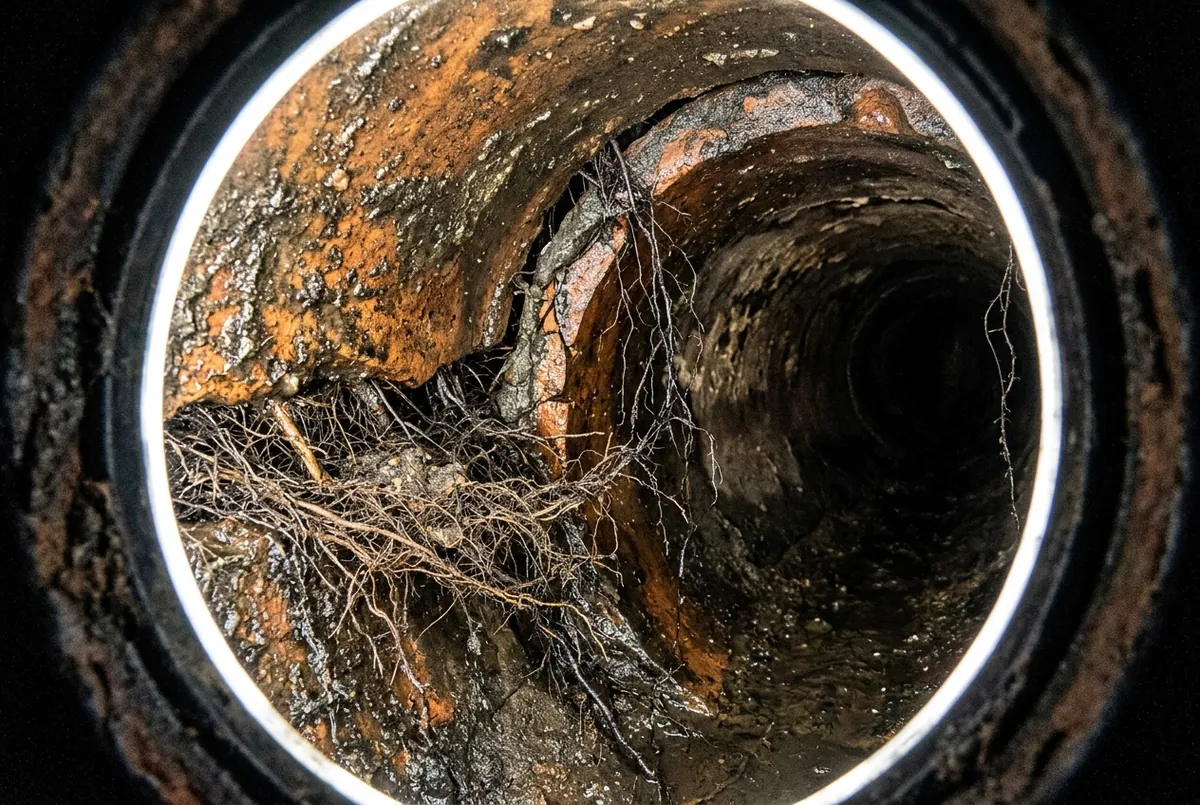
The camera shows the inside of the pipe as it is today:
- Tree roots growing in through joints or cracks
- Cracks, breaks or missing pieces of pipe
- Sags or low spots where water and waste sit
- Offset joints, where two sections of pipe no longer line up
- Pipe that has lost its round shape
- Buildup or blockages
It also shows what the pipe is made of, which matters a lot in older homes.
Why a General Home Inspection Is Not Enough
A general home inspection is a broad look at the whole house. Most inspectors run water through the fixtures and check for slow drains, but they do not put a camera inside the buried sewer line. A line can drain fine on inspection day and still have roots or a crack that will cause trouble later.
That is why many buyers add a sewer scope as its own inspection. It fills the gap between the house and the street.
Which Homes Need One Most
Any home can have a sewer problem, but some are higher risk.
Older Homes
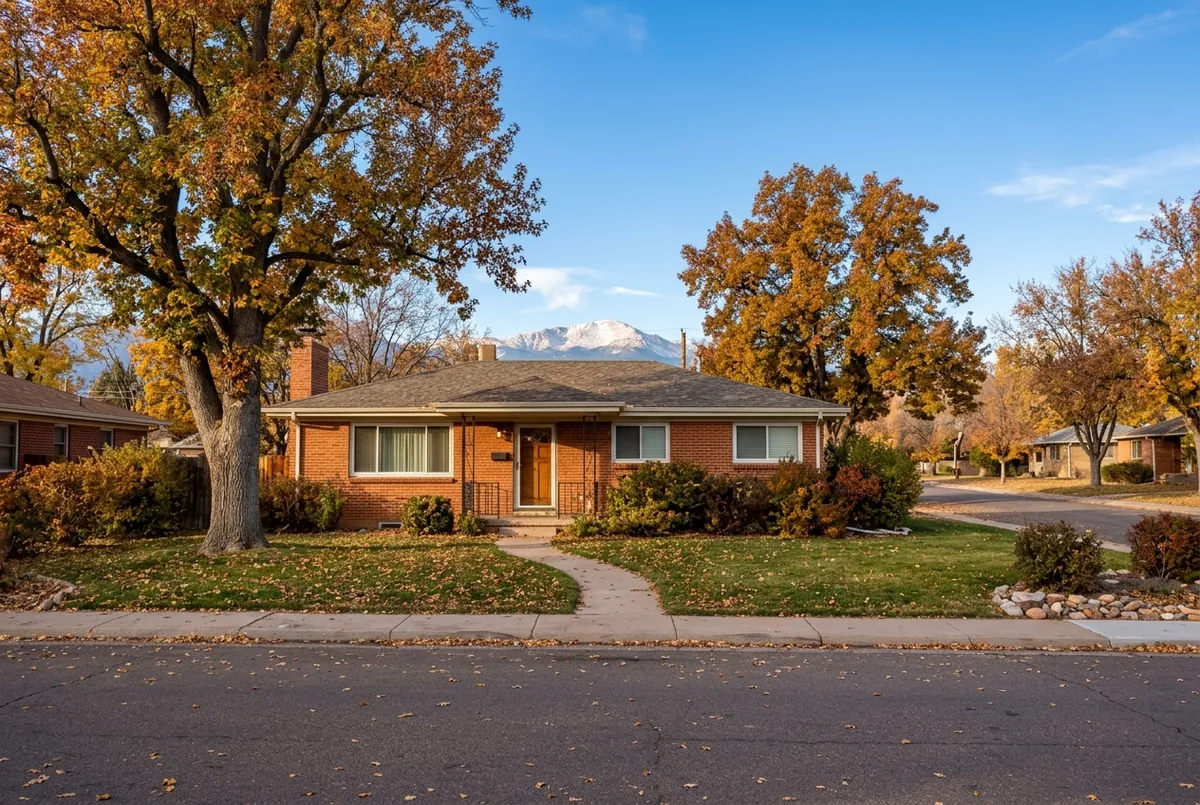
Homes built before about 1980 may have clay or cast iron sewer lines. Some mid-century homes have Orangeburg pipe, a tar-paper pipe used from roughly the 1940s into the 1970s that loses its shape with age. Many older homes on the Westside, in Manitou Springs, Stratmoor and Security-Widefield fall into this group.
Homes With Big Trees
Tree roots seek out moisture. They can find their way into older sewer lines through joints and small cracks, then grow and catch waste. A mature tree near the line is worth a closer look.
Homes on Shifting Ground
Expansive clay soils are common along the Front Range. They swell when wet and shrink when dry, which can shift and crack buried pipe over time.
Homes With Warning Signs
Slow drains, gurgling, a sewer smell or a basement floor drain that has backed up are all reasons to scope the line before you buy. So is a home that sat empty for a while, since problems may not show until the drains get daily use again.
What the Camera Can Show
Here is what each common finding usually means for a buyer.
| Finding | What it usually means |
|---|---|
| Light roots at a joint | Roots can be cleared, but they tend to grow back until the damaged joint is fixed |
| Heavy roots or a break | Likely needs a repair of that section |
| A sag or belly | Waste can collect in the low spot and cause repeat clogs |
| Orangeburg pipe | It deforms with age, so it is worth asking about replacement |
| Clean PVC line | Usually good news, especially in a newer home |
We explain what we see on the screen in plain words, so you know what each finding means before you decide anything.
When to Book It
Book the sewer scope early in your inspection period, alongside the general home inspection. That leaves time to get an estimate if the camera finds a problem, and time to talk with your agent before your deadlines.
Ask your agent or the seller where the cleanout is. Access is easier when we know where to start. If the home is vacant, make sure the water is on, since we run water through the line during the check.
What to Do If the Scope Finds a Problem
A problem on camera does not have to end the deal. It gives you facts to work with.
- Ask what the finding means. Is it a small issue to watch, a section that needs repair, or a line that needs replacing?
- Get an estimate. If repair is needed, we can explain whether a spot repair or a full replacement makes sense and give you an estimate before any work starts.
- Talk to your agent. Many buyers use the findings to ask for a repair, a credit or a price change. Your agent can tell you what is usual in your contract.
- Plan ahead. If the line is older but working, you know to budget for it and keep an eye on it.
Any sewer repair may need a permit. The Pikes Peak Regional Building Department handles building permits for much of El Paso County, so check with them or your town about what the job needs.
Common Questions
How long does a sewer scope take?
It depends on how long the line is and how easy the cleanout is to reach. Ask when you book and we can give you an idea for that home.
Is a sewer scope worth it on a newer home?
It is less pressing on a newer home with PVC lines and no warning signs. It is still worth thinking about if there are large trees near the line or the drains act up.
Can I watch the inspection?
Yes. You can watch the screen with us as the camera travels down the line, and we explain what you are seeing.
When to Call a Professional
Call a licensed plumber for a sewer scope when:
- You are under contract on a home built before about 1980.
- There are large trees between the house and the street.
- The home has slow drains, gurgling or a sewer smell.
- The seller cannot tell you when the sewer line was last checked.
Buying in Colorado Springs? Book a Camera Inspection With Incline Plumbing & Drain
We are a locally owned plumber based on the Westside of Colorado Springs. We run the camera, show you what is inside the line and explain your options honestly, with no upselling. If a repair is needed, you get an estimate before any work starts.
Learn more about our sewer camera inspections and our sewer line repair and replacement service. Call us Monday to Friday, 7am to 5pm, or contact us online.